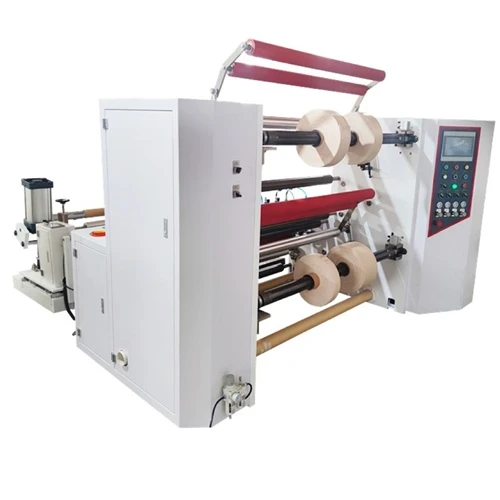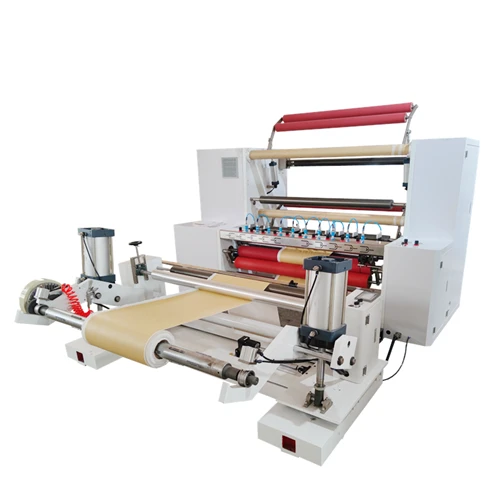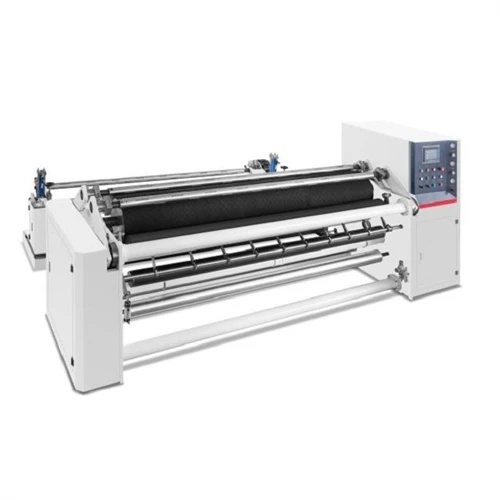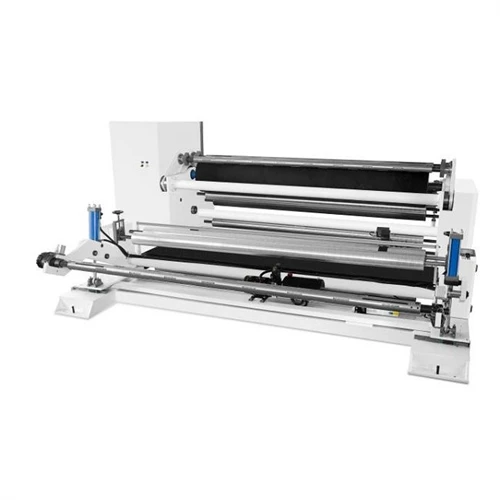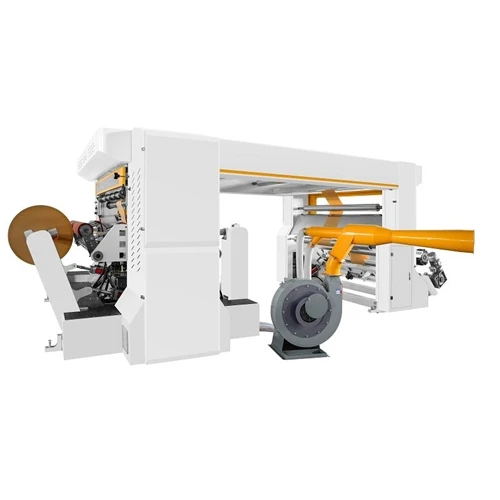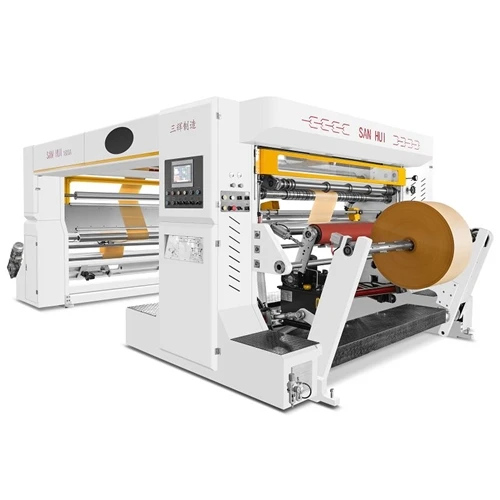
1. Packaging and Printing Scenarios: This is the most widespread application area for slitting machines. They are primarily used for the precise slitting of rolls of packaging paper, plastic composite films, self-adhesive materials, and cardboard boxes, covering the paper cutting stages after food packaging, daily chemical packaging, and book printing. They are compatible with various slitting machine models, including rotary and flat blade machines.
2. Paper Industry Scenarios: Slitting large rolls of base paper, including household paper (toilet paper, napkins), industrial paper, and specialty paper, cuts entire rolls of base paper into widths that meet end-user requirements. Integrated rewinding and slitting machines are commonly used to improve production efficiency.
3. Lithium-ion Battery New Energy Scenarios: A rapidly emerging high-requirement application scenario in recent years, used for slitting core substrates such as lithium-ion battery positive/negative electrode sheets, copper foil, and aluminum foil. Extremely high slitting precision and stability are required, often employing high-precision servo-controlled slitting equipment to ensure electrode size consistency.
4. Film Material Scenarios: Slitting various plastic films such as PET, PVC, PE, and BOPP, as well as optical and insulating films, for use as raw materials in downstream products such as photovoltaic backsheet films, electronic insulating films, and packaging films. Some scenarios require a cleanroom slitting machine.
5. Textile Industry Scenarios: Slitting textile rolls such as fabrics, non-woven fabrics, and chemical fiber tows. For example, slitting large rolls of raw fabric into narrow widths, and slitting non-woven fabrics for use in masks/protective clothing. Some models support automatic edge recycling.
6. Medical and Healthcare Scenarios: Slitting raw materials for medical consumables such as medical tapes, infusion tubing films, medical non-woven fabrics, and surgical dressing rolls. These must meet the cleanroom standards for medical device production. Some equipment has aseptic cutting capabilities.
7. Rubber and Plastic Building Materials Scenarios: Slitting rubber rolls, plastic sheets, waterproof rolls, and thermal insulation materials. Adapting to the slitting needs of large, wide rolls. Most models are equipped with an automatic deviation correction system to ensure neat slitting edges.