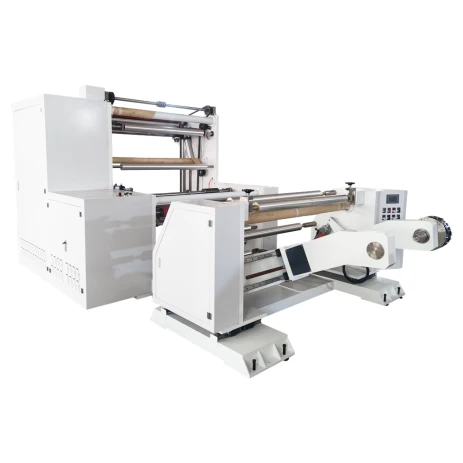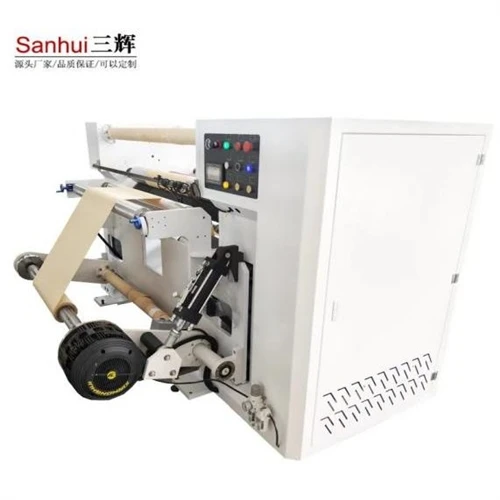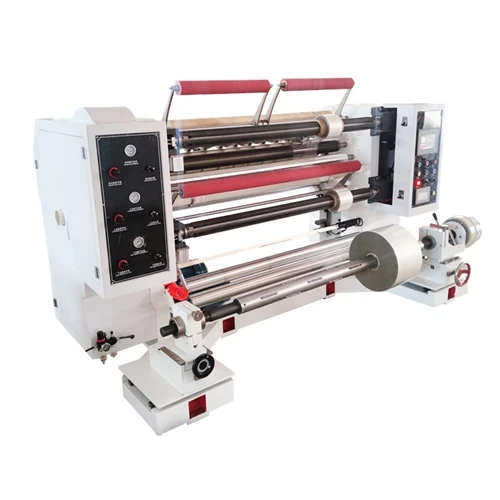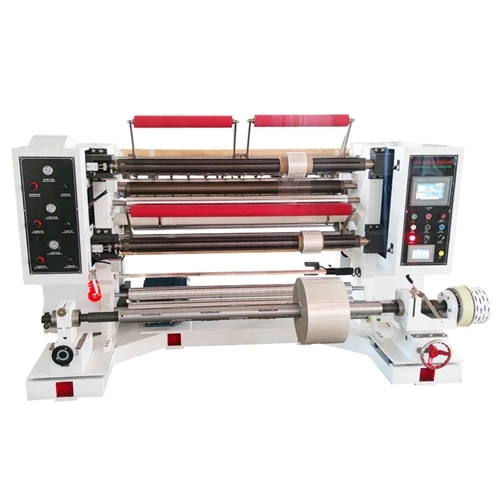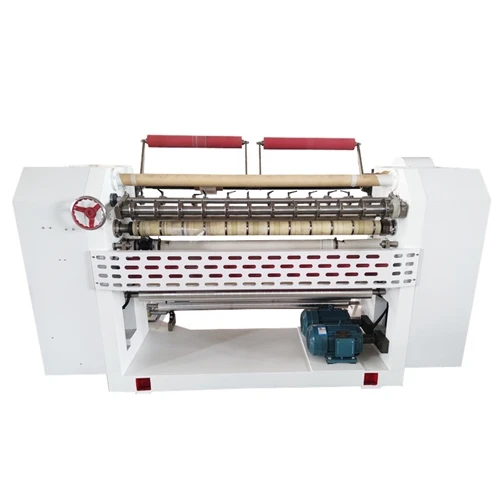
Previously, the magnetic powder clutch speed of slitting machines could not be high because high-speed friction of the magnetic powder during operation easily caused high temperatures, shortening its lifespan and, in severe cases, jamming, hindering machine operation and severely impacting production efficiency. The current solution uses dual frequency conversion motor control, allowing the magnetic powder friction to be kept at a constant value even when the diameter of the wound material increases, thus preventing high temperatures.
The traditional control scheme for slitting machines uses a large motor to drive the take-up and unwound shafts, with a magnetic powder clutch on the shafts. The resistance generated by the magnetic powder clutch is controlled by adjusting the current, thereby controlling the surface tension of the material. The magnetic powder clutch and brake are special automated actuators that transmit torque through magnetic powder filled in the working gap. Changing the magnetic current alters the magnetic state of the powder, thus adjusting the transmitted torque. It can be used for stepless speed regulation from zero to synchronous speed, suitable for high-speed fine-tuning and low-to-medium power speed regulation systems. It is also used in unwinding or rewinding tension control systems to regulate torque by adjusting the current to ensure stable tension during winding. Slitting machines are constantly evolving from single-motor control to dual-motor and triple-motor control, becoming more stable and efficient at higher machine speeds.